
How did a combination of rice, lentils, chickpeas, and pasta become one of Egypt's most beloved dishes? The answer reveals a fascinating history of culinary exchange, everyday ingenuity, and the pleasure of a well-balanced meal.
At first glance, koshari seems like an unlikely combination. Rice, lentils, chickpeas, and pasta share a bowl, generously dressed with tomato sauce and finished with crisp onions. It is a dish built almost entirely from ingredients that many households keep in their pantry.
And yet, something remarkable happens when they come together.
The lentils provide an earthy richness. Rice and pasta bring contrasting textures. Chickpeas add substance, while a spiced tomato sauce and vinegar-based dressing introduce acidity and warmth. Finally, crisp onions offer a satisfying crunch.
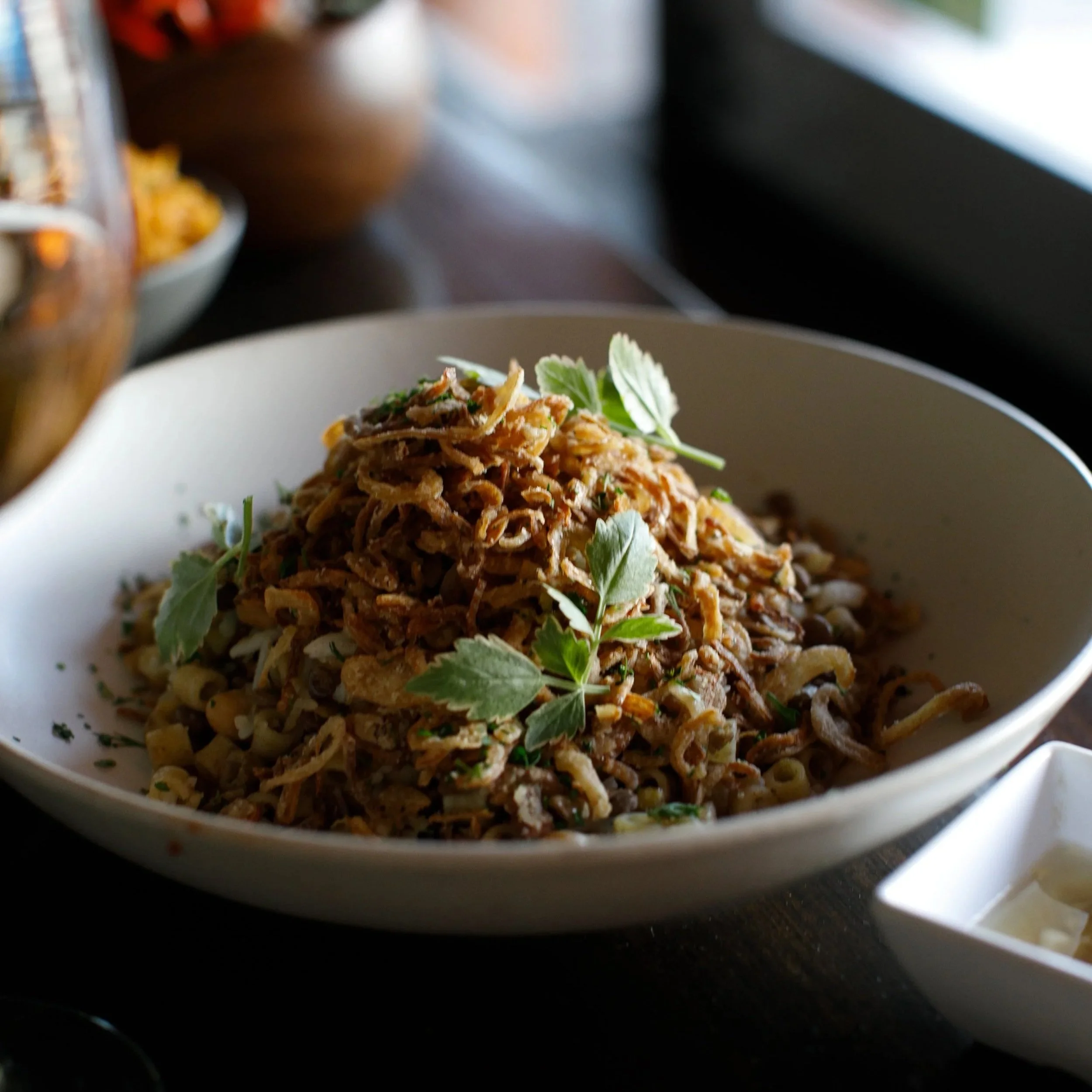
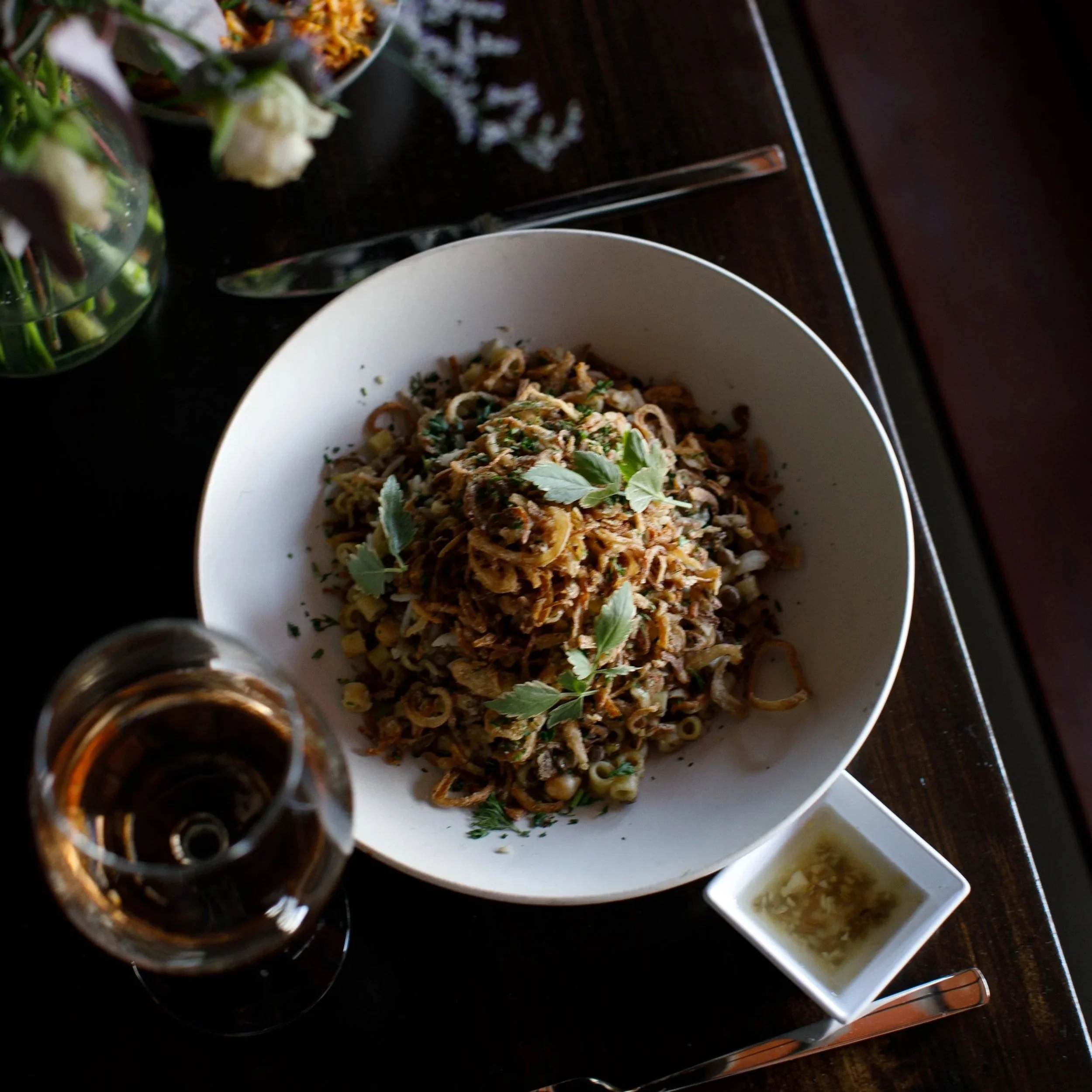
At Flavors from Afar, our kitchen prepares Egyptian koshari with lentils, rice, chickpeas, and pasta, served with spiced tomato sauce, crispy shallots, and toasted cumin vinaigrette.
To appreciate this dish is to understand how everyday ingredients became an expression of Egyptian culinary identity.
What Is Koshari?
Koshari, also spelled koshary or kushari, is widely regarded as Egypt's national dish.
It is a filling, affordable meal enjoyed in homes, neighborhood restaurants, and street food shops throughout the country.
Unlike dishes built around one central ingredient, koshari depends on the relationship between several components. Each contributes something different, and no single ingredient dominates.
A typical Cairo preparation includes rice, brown lentils, macaroni, sometimes vermicelli, chickpeas, tomato sauce, fried onions, and a garlicky vinegar dressing known as da'a or dakka. Chile sauce may be added according to personal preference.
What makes koshari especially appealing is its accessibility. The ingredients are familiar, relatively inexpensive, and capable of feeding a family or a busy restaurant full of customers.
Its simplicity, however, should not be confused with a lack of culinary sophistication.
A memorable bowl requires attention to texture, seasoning, and balance.
The Surprising History of Egyptian Koshari
The origins of koshari are more complicated than they might first appear.
One popular explanation connects the dish to Indian khichdi, a preparation of rice and lentils. According to this account, Indian soldiers serving under British rule helped introduce the combination to Egypt during the nineteenth century.
The resemblance is intriguing, but food historians caution against treating this explanation as established fact.
Egypt had longstanding commercial and cultural connections with other regions, and combinations of grains and legumes existed in several culinary traditions.
Food archaeologist Mennat-Allah El Dorry has identified a nineteenth-century travel account describing a rice-and-lentil dish eaten in Suez. That account predates some of the commonly repeated stories about British occupation and Indian soldiers.
Another possible influence comes from mujaddara, a dish of lentils, rice, and onions found in several Middle Eastern cuisines.
The precise history remains debated, but one point is clear: modern Egyptian koshari developed through the combination and adaptation of ingredients that became part of Egypt's evolving food culture.
Its history is not necessarily the story of one invention. It is the story of a dish taking shape over time.
How Did Pasta Become Part of Koshari?
Perhaps the most surprising ingredient in koshari is pasta.
Rice and lentils are familiar partners in many cuisines, but adding macaroni introduces another texture entirely.
One historical explanation points to the influence of Italian communities in Egypt, particularly in Cairo and Alexandria during the nineteenth and twentieth centuries.
Italian culinary traditions contributed to Egyptian urban food culture, and pasta eventually became a defining component of modern koshari.
The combination may seem unconventional to someone encountering it for the first time. But its appeal becomes apparent in the finished dish.
Rice provides softness, lentils offer a firmer bite, and pasta contributes a different kind of tenderness.
Rather than competing, these ingredients create a layered eating experience.
Koshari demonstrates how culinary traditions can evolve through the practical and creative decisions of everyday cooks.
The Koshari Shops of Cairo
In Cairo, koshari is more than a recipe. It is part of the rhythm of daily life.
Specialized restaurants serve it to students, office workers, families, and people looking for a quick, satisfying meal.
A traditional koshari shop often features large containers of cooked rice, lentils, pasta, and chickpeas. Servers assemble portions with practiced speed, layering the ingredients before adding sauce and crisp onions.
The final bowl can be customized with additional vinegar dressing or chile sauce.
This style of service reflects one of koshari's enduring strengths: it is accessible without being ordinary.
A bowl can be assembled quickly, yet every component contributes to the finished dish.
Koshari's place in Egyptian life received international recognition in December 2025, when UNESCO inscribed the dish and its associated everyday practices on the Representative List of the Intangible Cultural Heritage of Humanity.
The recognition celebrates not only the food itself but also the knowledge, preparation, and social traditions surrounding it.
Why Tomato Sauce and Vinegar Matter
Without its sauces, koshari would be a very different dish.
Rice, pasta, lentils, and chickpeas all have relatively mild flavors. The sauces bring the ingredients together and prevent the combination from feeling heavy.
Egyptian koshari commonly includes a seasoned tomato sauce and a separate dressing of garlic and vinegar.
The tomato sauce contributes savory depth and acidity, while the vinegar dressing adds sharpness.
Some versions include chile sauce for additional heat.
The contrast is essential. Soft grains and legumes benefit from acidity, while fried onions contribute sweetness and crispness.
Koshari is a reminder that balance often comes from combining opposing sensations: soft and crisp, earthy and bright, rich and acidic.
At Our Table: Egyptian Koshari at Flavors from Afar
At Flavors from Afar, our kitchen celebrates the familiar ingredients and contrasting textures that make Egyptian koshari so distinctive.
Our version brings together Egyptian lentils, rice, chickpeas, and pasta with a spiced tomato sauce.
We finish the dish with crispy shallots and toasted cumin vinaigrette.
The shallots add a delicate crunch, while the vinaigrette introduces the aromatic warmth of cumin alongside the brightness of vinegar.
Cumin has a long history in Egyptian cooking and remains an important seasoning in dishes throughout North Africa and the Middle East. Toasting cumin develops its aroma, giving the spice a deeper, nuttier character.
Our vinaigrette offers a distinctive interpretation of the acidity and seasoning traditionally associated with koshari.
The result is a dish that invites you to notice each ingredient individually before appreciating how they come together.
For guests unfamiliar with Egyptian cuisine, koshari is an approachable introduction. For those who grew up enjoying it, the combination of lentils, rice, pasta, and tomato sauce may bring familiar flavors to mind.
A Dish That Celebrates Everyday Cooking
One of the most compelling things about koshari is that it does not depend on expensive ingredients or elaborate presentation to be meaningful.
Its character comes from the careful combination of ordinary foods.
Over time, those ingredients became part of a dish associated with Egyptian daily life, neighborhood restaurants, family meals, and national identity.
Koshari also challenges the assumption that great food must begin with something rare or luxurious.
Sometimes, culinary creativity means recognizing the possibilities in what is already available.
At Flavors from Afar, we believe dishes like koshari deserve the same curiosity and appreciation as any celebrated culinary specialty. Our Egyptian koshari is an invitation to discover how lentils, rice, chickpeas, pasta, spices, and sauce can tell a much larger story.
Join us at Flavors from Afar, 5652 Hollywood Boulevard in East Hollywood, Los Angeles, and experience our Egyptian Koshari ($22).
Come curious. Leave with a story worth sharing.