
From the roasting ovens of Marrakech to the kitchen at Flavors from Afar, discover the Moroccan tradition of méchoui, where patience, aromatic spices, and slow cooking transform lamb into a dish worthy of celebration.
There is something remarkable about a dish that asks us to wait.
In a world accustomed to quick meals, Moroccan méchoui belongs to a different rhythm. Lamb is seasoned, placed over gentle heat, and left to tenderize for hours. The result is meat that yields easily from the bone, its rich flavor developed through time rather than complicated preparation.
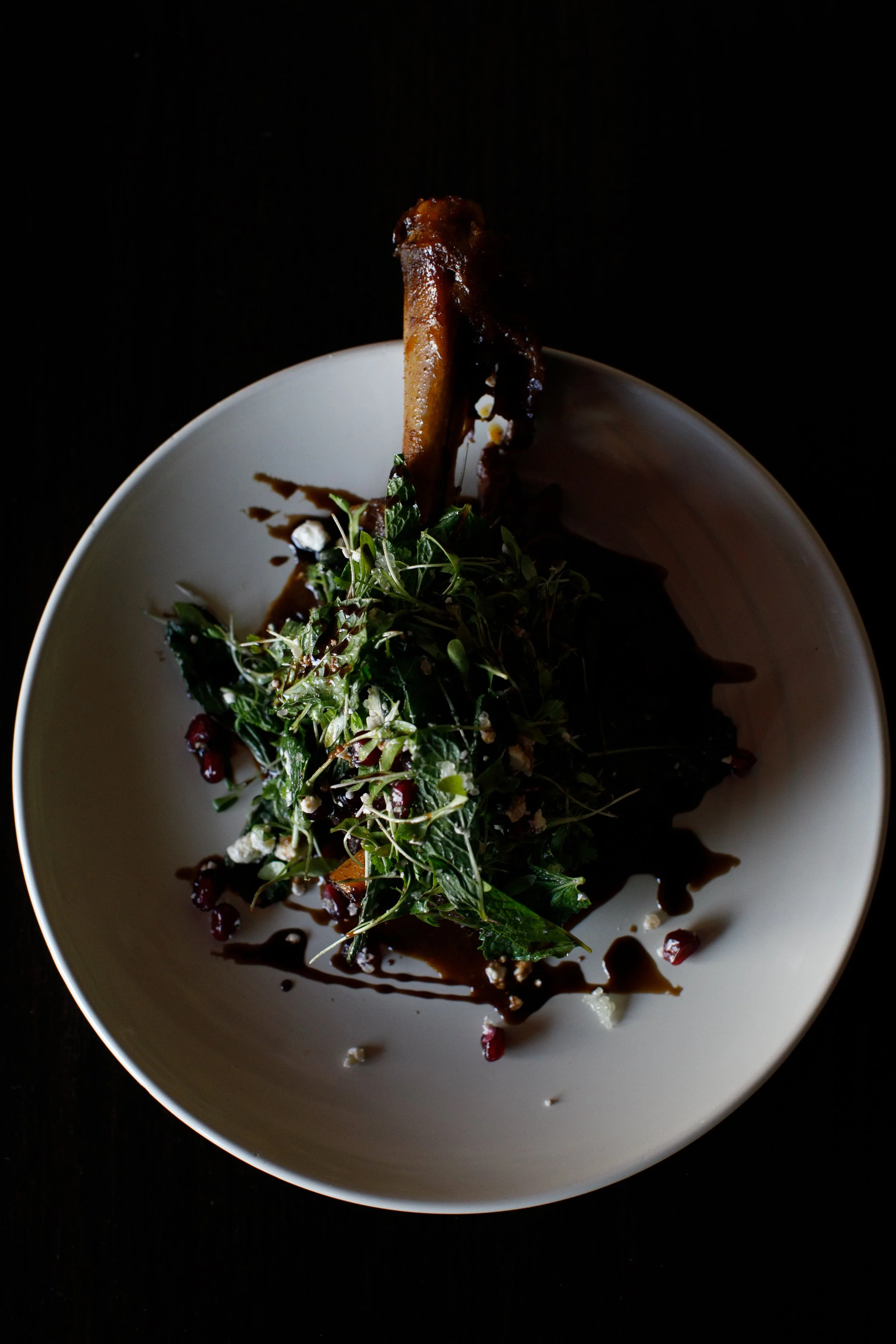
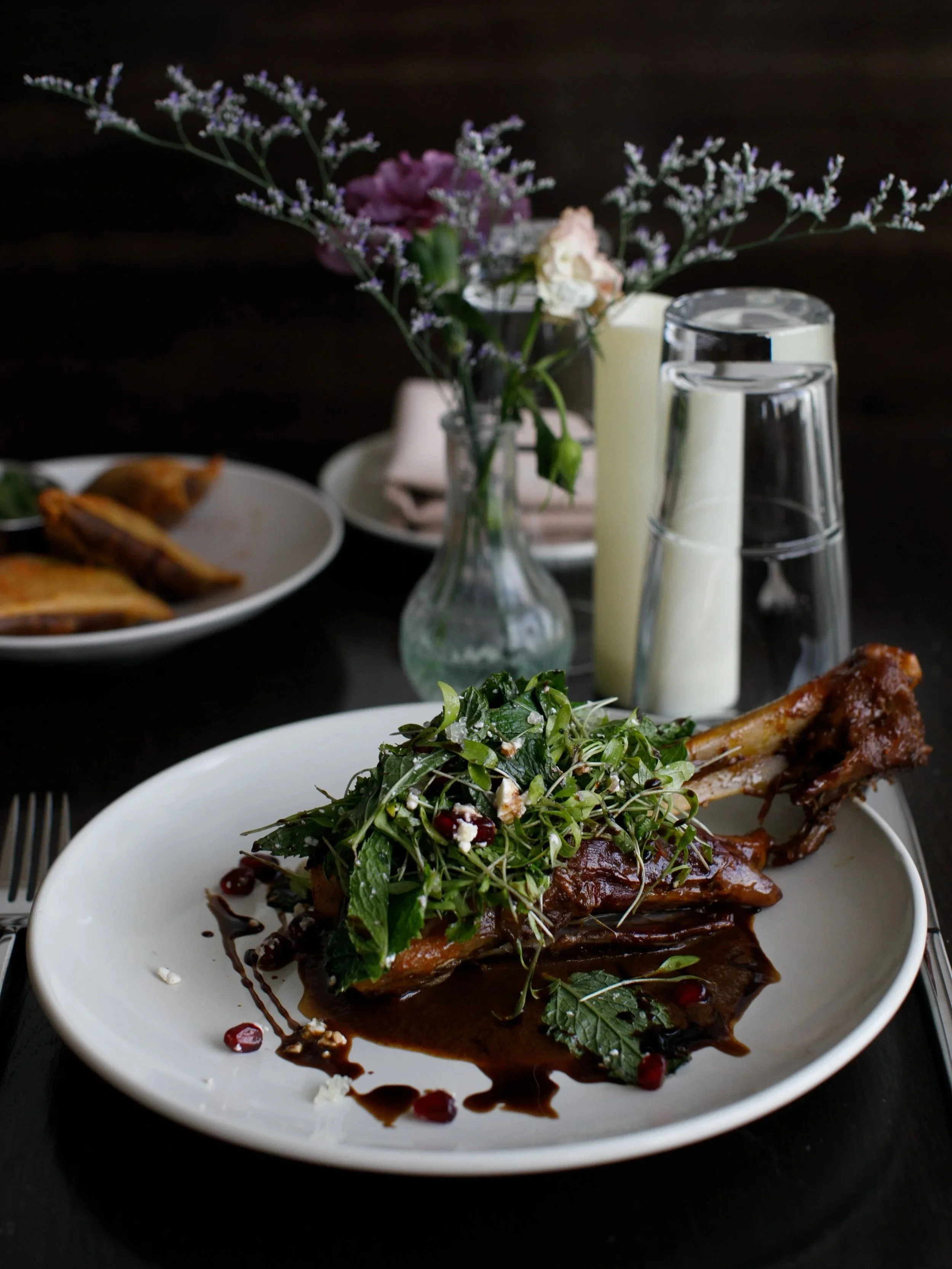
At Flavors from Afar, our Méchoui Lamb Shank draws inspiration from this celebrated Moroccan tradition. Our kitchen slow-roasts a whole lamb shank with cumin and warming spices until the meat is tender enough to pull away from the bone.
Méchoui is part of a culinary tradition associated with hospitality, communal gatherings, and the generosity of sharing a meal.
What Is Moroccan Méchoui?
Méchoui, sometimes spelled mechoui or meshwi, takes its name from an Arabic word associated with roasting or grilling.
Across North Africa, the term refers to preparations of roasted meat, particularly lamb. In Morocco, traditional méchoui often involves roasting a whole lamb or sheep, although regional variations include large cuts prepared in different ways.
The meat may be cooked over glowing embers, on a rotating spit, or inside a traditional clay oven.
In Marrakech, specialized cooks have long prepared whole lambs in underground ovens, where the enclosed heat gradually transforms the meat into something exceptionally tender.
Unlike dishes that rely on elaborate sauces, traditional méchoui often emphasizes the natural richness of lamb. Salt, cumin, and butter may be among the principal seasonings.
The beauty of the dish lies in this restraint. The meat itself remains the centerpiece.
A Moroccan Tradition of Hospitality
In Morocco, méchoui has a longstanding association with celebrations and hospitality.
Whole roasted lamb may be served at weddings, religious holidays, family gatherings, and occasions honoring important guests.
Historically, preparing an entire animal represented both a substantial undertaking and an expression of generosity. A whole lamb could feed many people, making it particularly suited to communal dining.
The presentation was part of the experience.
Rather than arriving as individual portions, the roasted lamb could be placed at the center of a gathering, inviting guests to share from the same dish.
Some traditional preparations are eaten by hand, with pieces of tender meat accompanied by small dishes of salt and ground cumin.
The custom reflects a broader appreciation for food as a shared experience, where hospitality is expressed through the care taken in preparing and serving a meal.
At Flavors from Afar, this spirit of gathering is central to how we think about dining. Our restaurant brings culinary traditions from across Africa to one table, encouraging guests to discover the histories and flavors behind each dish.
The Art of Slow Roasting
What makes méchoui so tender? The answer begins with time and temperature.
Lamb shanks contain connective tissue that can be tough when cooked quickly. During prolonged cooking, collagen gradually breaks down into gelatin, contributing to the meat's tender, succulent texture.
Traditional Moroccan méchoui uses several roasting techniques, depending on the region and occasion. In some preparations, a whole lamb is suspended inside a heated earthen oven. Others use a spit positioned above glowing coals.
A Moroccan culinary heritage study prepared for the World Intellectual Property Organization documents multiple variations, including pit-roasted lamb, spit-roasted lamb, and preparations using traditional neighborhood ovens.
These methods differ, but they share a central principle: careful control of heat allows the lamb to cook gradually without losing its character.
In our kitchen, we strive to follow that same philosophy of patience.
Our lamb shanks are seasoned in advance, then slow-roasted until tender. A final high-heat finish develops the roasted exterior while preserving the richness of the meat. The result honors the essential idea behind méchoui while adapting it to an individual restaurant entrée.
Cumin, Saffron, and the Aromas of Moroccan Cooking
Spices play an important role in Moroccan cuisine, but their purpose is not always to create heat. Often, they contribute fragrance, warmth, and complexity.
Cumin is particularly associated with méchoui. Its earthy, slightly nutty character complements lamb's richness, and traditional preparations frequently serve ground cumin alongside the roasted meat.
Saffron is another important ingredient in Moroccan cooking.
Harvested from the delicate stigmas of the crocus flower, saffron contributes a distinctive aroma and golden color. It appears in numerous Moroccan preparations, including rice dishes, stews, and festive meat recipes.
At Flavors from Afar, our kitchen incorporates saffron-infused ghee into the preparation of our Méchoui Lamb Shank. We season our lamb with a blend of cumin, coriander, ginger, paprika, turmeric, cinnamon, garlic, and other warming spices. These ingredients create an aromatic foundation that complements the slow-roasted meat. Rather than overwhelming the lamb, the spices add layers of fragrance that deepen during cooking. It is an example of how a traditional culinary idea can inspire a contemporary interpretation while retaining its recognizable character.
Why Lamb Holds a Special Place in Moroccan Cuisine
Lamb and sheep have long been important to food traditions across Morocco and the wider Maghreb. Pastoral communities raised sheep and goats for food and other resources, and livestock became closely connected to agricultural life, commerce, and celebrations.
Lamb appears in a wide range of Moroccan dishes, from tagines and couscous preparations to grilled skewers and festive roasts. Different cuts lend themselves to different techniques. Tender cuts can be grilled quickly, while shanks and shoulders benefit from slower cooking. Méchoui demonstrates how cooks developed methods suited to the size and characteristics of the meat.
The dish also illustrates an important distinction between traditional food and a fixed recipe.
There is no single preparation that represents every Moroccan household or region. Cooking vessels, spice combinations, and serving customs vary. What connects these preparations is an appreciation for lamb cooked with care and served generously.
At Our Table: Méchoui Lamb Shank at Flavors from Afar
At our Pan-African bistro in East Hollywood, our Méchoui Lamb Shank is inspired by Morocco's tradition of slow-roasted celebration lamb.
We begin with a whole bone-in lamb shank, seasoned with cumin and aromatic spices. The lamb is marinated with saffron-infused ghee before undergoing a slow roast that allows the meat to become deeply tender. The preparation finishes with high heat, developing a roasted exterior while preserving the richness of the lamb. Our kitchen's approach reflects the balance between tradition and interpretation that defines the Flavors from Afar menu. Rather than presenting a whole roasted lamb, we serve an individual shank, allowing guests to experience the character of méchoui as part of a restaurant meal.
For guests interested in exploring Moroccan wines, we recommend Ferme Rouge, a Moroccan red with ripe fruit, spice, and a smooth finish. Its savory and fruit-forward character offers a complementary pairing with the richness of slow-roasted lamb.
Our Méchoui Lamb Shank is $50, with sides available separately.
A Tradition Worth Sharing
The story of méchoui reminds us that some of the most memorable dishes are built on surprisingly simple ideas: Good ingredients. Careful seasoning. Patient cooking. A table surrounded by people.
For generations, Moroccan cooks have used fire and time to prepare lamb for gatherings large and small. Today, those traditions continue to inspire kitchens around the world, including ours in East Hollywood. At Flavors from Afar, we celebrate the opportunity to introduce guests to these culinary histories through the dishes we prepare.
Our Méchoui Lamb Shank is one expression of that tradition, connecting the warmth of Moroccan cooking with the creativity of our Pan-African kitchen.
Discover our Méchoui Lamb Shank at Flavors from Afar, 5652 Hollywood Boulevard, Los Angeles.
Every dish has a story. Discover the next one at our table.