
From medieval kitchens to Somali Ramadan tables and our own kitchen in East Hollywood, discover the history, spices, and traditions behind one of East Africa's most beloved pastries.
There is a particular pleasure in biting into a freshly prepared sambusa. The first thing you notice is the crisp pastry, followed by the warmth of its savory filling. A little chile sauce adds another dimension, bringing heat and brightness to each bite.
At Flavors from Afar, our sambusas come in two varieties: lamb seasoned with xawaash, onions, and herbs, or a vegetarian filling of cabbage, carrots, and potatoes. Both are served with basbaas chile sauce, a condiment with deep roots in Somali cooking.
These small triangular pastries have a much larger story to tell. Their history connects East Africa to centuries of culinary exchange, while their ingredients reveal the distinctive traditions that have made sambusas a beloved part of kitchens across the region.
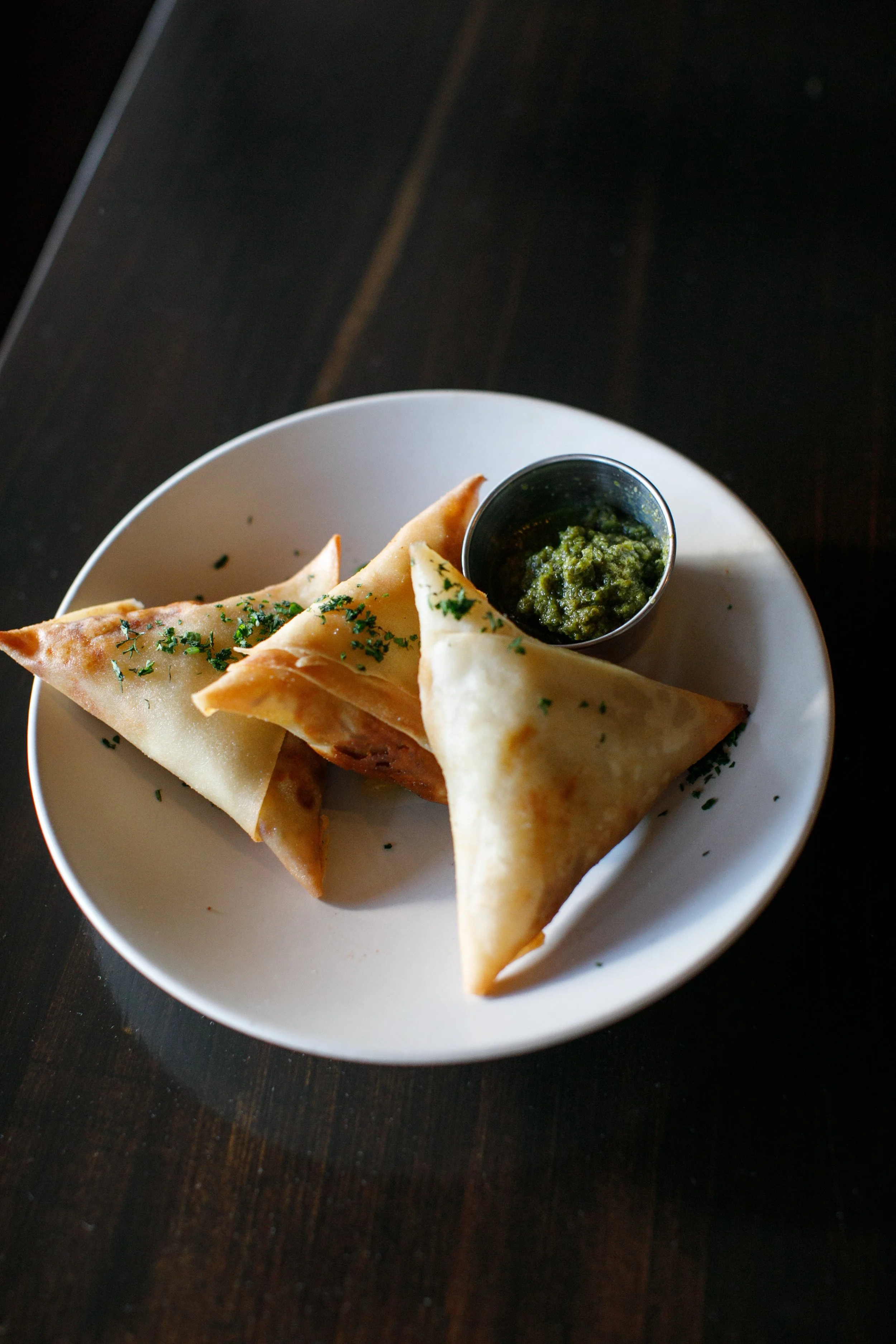
Vegan Sambusa
Where Did Sambusas Originate?
The sambusa belongs to an extended family of stuffed pastries found throughout Africa, the Middle East, Central Asia, and the Indian subcontinent.
According to food historian Alan Davidson's The Oxford Companion to Food, related pastries appeared in medieval Persian and Arabic culinary traditions under names such as sanbosag, sanbusak, and sanbusaj.
Arabic cookbooks dating to the tenth century describe early versions of these pastries, demonstrating that the idea of enclosing savory ingredients in dough has a remarkably long history.
The exact journey of the sambusa into East Africa is difficult to reconstruct. However, its development belongs to a broader history of exchange connecting African communities with merchants and travelers from Arabia, Persia, and India.
What makes the sambusa particularly interesting is not simply where it began, but how different communities made it their own.
The Indian Ocean: A Culinary Crossroads
Long before modern transportation, the Indian Ocean connected communities across Africa and Asia.
Ports along the East African coast were important centers of commerce, bringing together merchants, sailors, and local communities. Along with goods came ideas about ingredients, seasonings, and cooking techniques.
The Swahili Coast, stretching through parts of present-day Somalia, Kenya, Tanzania, and Mozambique, developed distinctive food traditions through exchanges between coastal and inland African communities and the wider Indian Ocean world.
These connections help explain why similar pastries appear in geographically distant cuisines.
Yet East African food traditions were never simply collections of imported recipes. Local cooks adapted culinary ideas to their ingredients, preferences, and cultural practices.
Over generations, the sambusa became a recognizable part of East African cooking, developing regional identities that continue today.
Somali Sambuus: A Pastry for Gathering
In Somalia, sambusas are commonly called sambuus.
These crisp pastries frequently contain seasoned meat, onions, and aromatic spices, although recipes differ between households.
Sambuus holds a particularly meaningful place during Ramadan, the Islamic holy month of fasting.
At sunset, families gather for iftar, the meal that breaks the day's fast. Sambuus is a familiar part of many Somali Ramadan tables, alongside other foods and drinks.
Preparing large quantities can become a shared family activity. Filling, folding, and sealing each pastry takes time, making the process an opportunity for conversation and cooperation.
Somali food writer Ifrah F. Ahmed has written about the relationship between sambuus, family traditions, and cultural memory. Her reflections illustrate how preparing familiar foods can help preserve knowledge across generations.
Sambuus is also enjoyed outside Ramadan, including during celebrations, afternoon gatherings, and everyday meals.
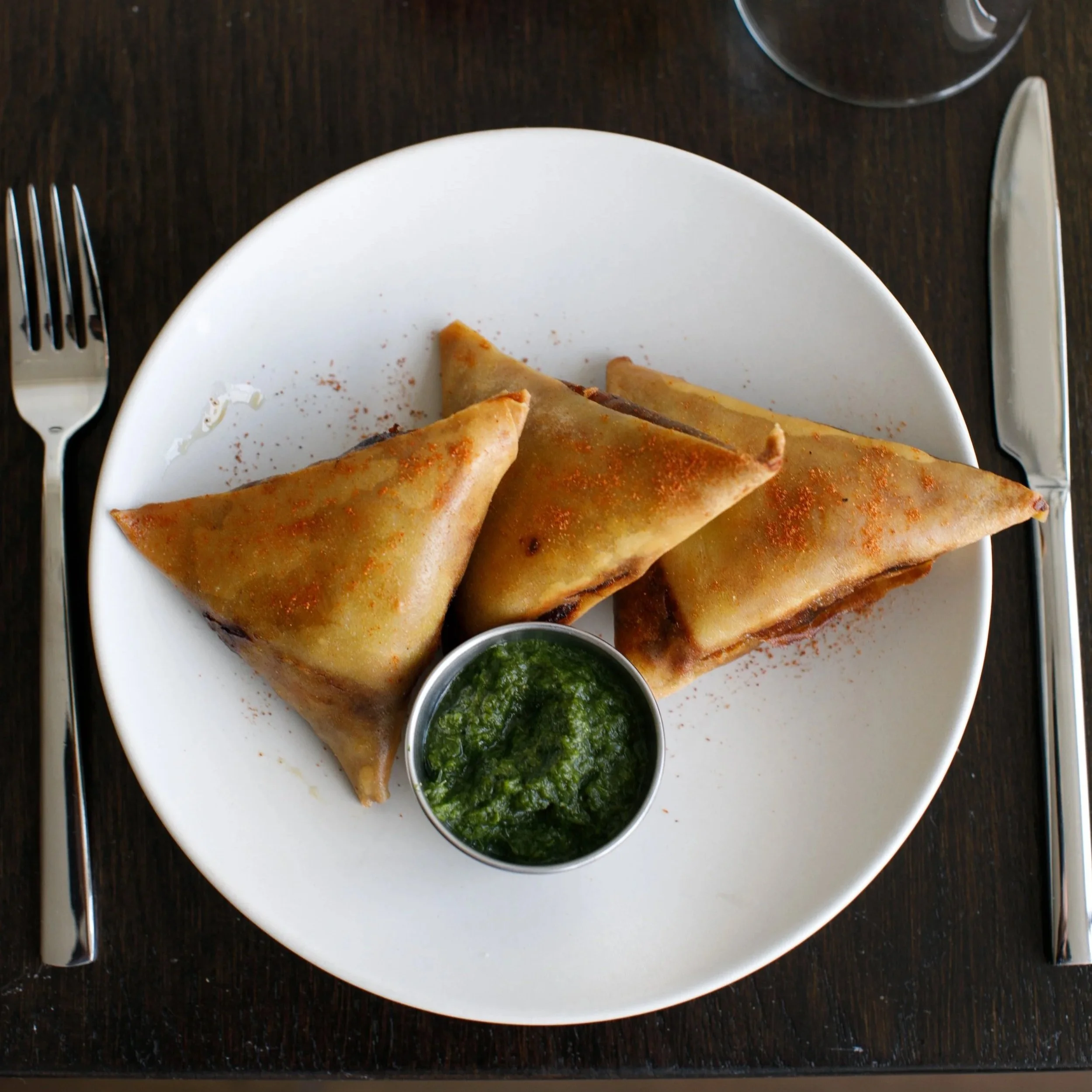
Lamb Sambusa
Ethiopian and Eritrean Sambusas: Regional Variations
In Ethiopia and Eritrea, sambusas are also widely enjoyed, with fillings that may include lentils, ground meat, or vegetables.
Lentil sambusas are especially popular in many households. Their soft, seasoned filling contrasts with the crisp pastry, creating a satisfying combination of textures.
Vegetarian versions also complement the plant-based cooking traditions found in Ethiopian and Eritrean communities, including foods prepared during Orthodox Christian fasting periods.
Yet no single filling defines an entire country's sambusas.
The ingredients and seasonings can vary according to family preferences, religious traditions, and local availability.
This diversity is one reason sambusas offer such an interesting introduction to East African food. A familiar shape can hold many different culinary expressions.
Xawaash: Understanding the Spice Behind Our Lamb Sambusa
One of the defining ingredients in our lamb sambusa at Flavors from Afar is xawaash, an aromatic spice blend associated with Somali cuisine.
The word xawaash refers to spices, and the blend can vary considerably between households and cooks.
Common versions incorporate ingredients such as cumin, coriander, cardamom, cinnamon, cloves, and turmeric. Each contributes its own fragrance and character.
Rather than producing heat alone, xawaash creates layers of aroma and warmth.
In Somali cooking, variations of the blend appear in rice dishes, meat preparations, and other savory foods.
At Flavors from Afar, xawaash seasons our lamb sambusa filling alongside onions and herbs.
It is a delicious introduction to the complexity of East African spice traditions, where seasoning is as much about fragrance and balance as intensity.
Basbaas: The Chile Sauce That Completes the Sambusa
A sambusa can be enjoyed on its own, but a good accompanying sauce introduces another layer of flavor.
At Flavors from Afar, we serve ours with basbaas chile sauce.
Basbaas is a Somali condiment traditionally associated with chile peppers. Recipes vary, sometimes incorporating ingredients such as garlic, citrus, herbs, or other seasonings.
Its defining characteristic is the lively heat it brings to a meal.
Paired with a crisp sambusa, chile sauce creates a pleasing contrast between the savory filling, delicate pastry, and sharper flavors of the condiment.
Together, xawaash and basbaas demonstrate two complementary elements of Somali cooking: the fragrant depth of blended spices and the bright intensity of chile.
Sambusas and Samosas: What's the Difference?
The resemblance between East African sambusas and Indian samosas is no coincidence. Both belong to the same broad family of stuffed pastries.
However, their preparations can differ.
Many East African sambusas feature thin, crisp pastry filled with meat, lentils, or vegetables.
The familiar North Indian samosa often has a thicker pastry and a filling of spiced potatoes and peas, although Indian preparations are themselves highly varied.
Elsewhere, related pastries may be baked rather than fried.
These differences reveal how a shared culinary idea can evolve across communities.
There is no single filling or preparation method that represents every sambusa. The variations are part of the food's enduring appeal.
At Our Table: Sambusas at Flavors from Afar
At our Pan-African bistro in East Hollywood, sambusas are an invitation to discover East African culinary traditions through familiar ingredients and distinctive seasonings.
Our kitchen prepares two varieties:
Lamb Sambusa: Crispy East African pastry filled with xawaash-spiced lamb, onions, and herbs.
Vegetarian Sambusa: Crispy East African pastry filled with cabbage, carrots, and potatoes.
Both are served with basbaas chile sauce.
Each offers a different experience. The lamb sambusa introduces the aromatic character of xawaash, while the vegetarian version highlights the satisfying combination of vegetables enclosed in crisp pastry.
Together, they demonstrate how one traditional food can accommodate different ingredients while retaining its recognizable character.
The next time you order sambusas, consider the centuries of culinary exchange behind their familiar triangular shape. Notice the seasoning, the texture, and the contrast between pastry and filling.
Sometimes, learning about a cuisine begins with something as simple as an appetizer.
Visit Flavors from Afar at 5652 Hollywood Boulevard in East Hollywood, Los Angeles, and explore our Pan-African menu.
Come curious. Leave with a story worth sharing.